Vanguard proxy-voting data: younger investors pick its ESG option at twice the older rate
The Glass Lewis ESG Policy drew 38.8% of investors under 30 in the 2026 season, but its asset-weighted share of selections fell to 12% from 18%.
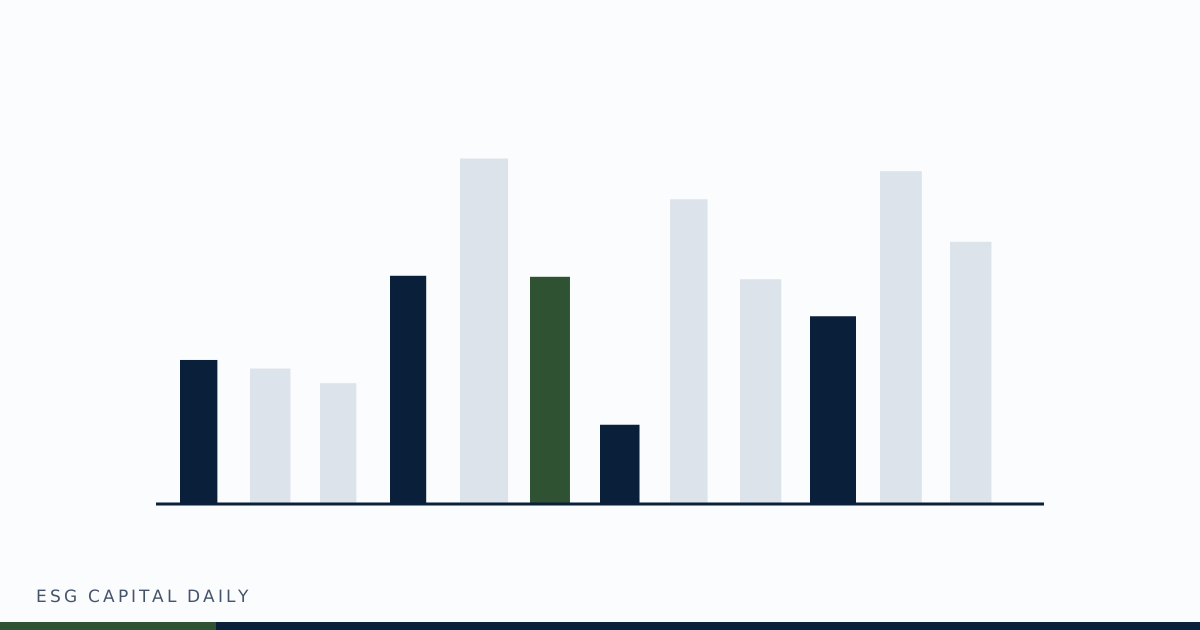
Vanguard's proxy-voting choice menu now has a demand curve, and it runs steeply by age. In the 2026 Investor Choice report, 38.8% of investors under 30 selected the Glass Lewis ESG Policy and 36.3% of those aged 31 to 45 did the same, while 19.4% of the 46-to-61 cohort and 16.2% of investors aged 62 to 80 chose it, which puts the two youngest groups at roughly twice the selection rate of the two oldest. The Fund Proxy policy ran second in both young cohorts, at 29.3% and 29.7%, and female investors chose the ESG policy at 25% against 15% for men, according to the report.
Scale is what makes the split consequential. Investor Choice, launched in early 2023, drew 507,000 participating investors in 2026, up from 82,000 in 2025, and eligible assets grew from around $1 trillion to $4 trillion. Vanguard expects to extend the program to all U.S. equity index funds in 2027, which would take eligible assets to $8 trillion.
The menu is wider than the ESG headline. Beside the Glass Lewis ESG Policy, which follows Glass Lewis's thematic ESG voting policy and its view that returns can be improved by disclosing and mitigating ESG risks, investors can vote with a Company Board-Aligned Policy, with the Fund Proxy Policy adopted by the fund's trustees, with a Mirror Voting Policy that votes in roughly the same proportions as other shareholders, or with the Egan-Jones Wealth-Focused Policy added in 2025, which rejects ESG proposals unless they directly contribute to revenue generation at the company receiving them. The report does not say how often that last option was selected.
Ballots and dollars disagree
Vanguard does report the dollar-weighted version, and it points the other way: the asset-weighted share of investors selecting the Glass Lewis ESG Policy fell to 12% in the 2026 season from 18%, a move Vanguard attributes likely to the shift in shareholder mix as new funds joined the program. That explanation should be tested rather than assumed. If adding funds dilutes the ESG share, the 2027 expansion to every U.S. equity index fund will dilute it again, and the asset-weighted figure will say as much about the size of the new shareholder base as about anyone's appetite for the label.
The advice layer underneath the policy drawing those young votes is itself in motion. Glass Lewis announced in late September that it would merge with the sustainability data platform Clarity AI, keeping the two brands separate until 2027 and integrating their products in phases, as this publication reported. An investor selecting the ESG option in Vanguard's menu is choosing a policy written by a business being rebuilt around sustainability data, a pairing between voting advice and a data layer that has been arriving in step with Europe's disclosure rules rather than trailing them.
The two percentages at the center of the report describe different populations and cannot be reconciled from what Vanguard released: 38.8% is a share of people, 12% is a share of assets, and no cohort counts were published to bridge them. The next reading comes with the 2027 expansion to all U.S. equity index funds, when the eligible pool goes to $8 trillion and the asset-weighted share gets a larger, different denominator.
Save this analysis and keep the funds you follow together in My Desk.
Sign in to save articles or follow funds. Products
Italy's green bond draws $129bn of orders for $9.4bn sale
 Products
Enable Ventures raises $50.3 million for a disability tech fund
 Products